
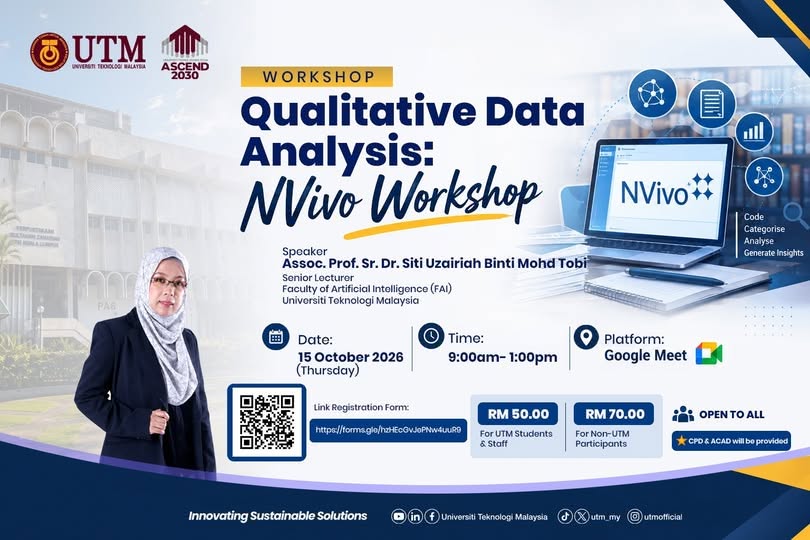
KUALA LUMPUR, 15 October 2026 – Analyzing qualitative research data can be challenging, particularly when dealing with large amounts of interview transcripts, observations and other textual information. With the right tools and techniques, however, researchers can make sense of complex data and uncover meaningful insights.
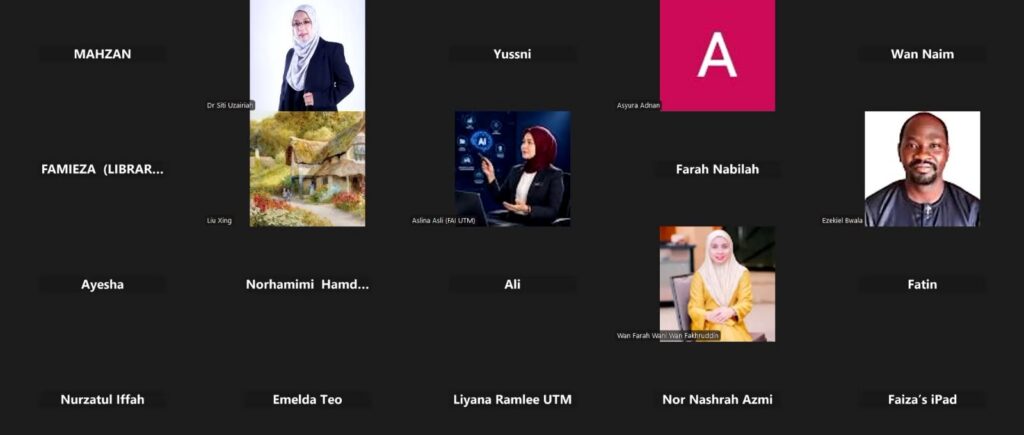
Building on its efforts to strengthen research skills, UTM Library organized the second session of the Qualitative Data Analysis: NVivo Workshop on 15 October 2026. The online workshop brought together 22 participants from Universiti Teknologi Malaysia (UTM) and other higher learning institutions, including Universiti Kebangsaan Malaysia (UKM), Universiti Teknologi MARA (UiTM), Universiti Malaya (UM) and Universiti Utara Malaysia (UUM).
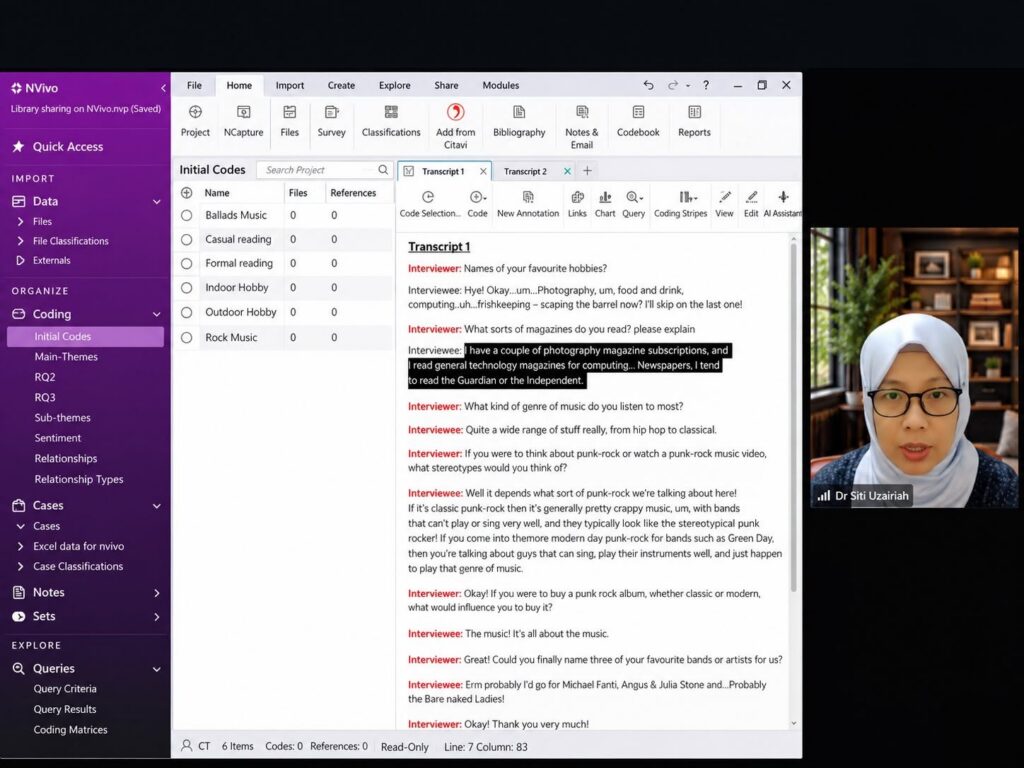
The four-hour workshop provided another opportunity for researchers and postgraduate students to explore how NVivo can simplify the process of organizing, analyzing and interpreting qualitative research data.
The session was led by Assoc. Prof. Sr. Dr. Siti Uzairiah Binti Mohd Tobi,Senior Lecturer at the Faculty of Artificial Intelligence (FAI), UTM, who shared her expertise in qualitative data analysis and guided participants through the practical applications of NVivo.
A key takeaway from the workshop was the importance of understanding research data rather than relying entirely on software to generate findings. While NVivo offers useful features for managing and analyzing large volumes of information, meaningful interpretation still depends on the researcher’s critical thinking, understanding of the research context and ability to recognize patterns within the data.
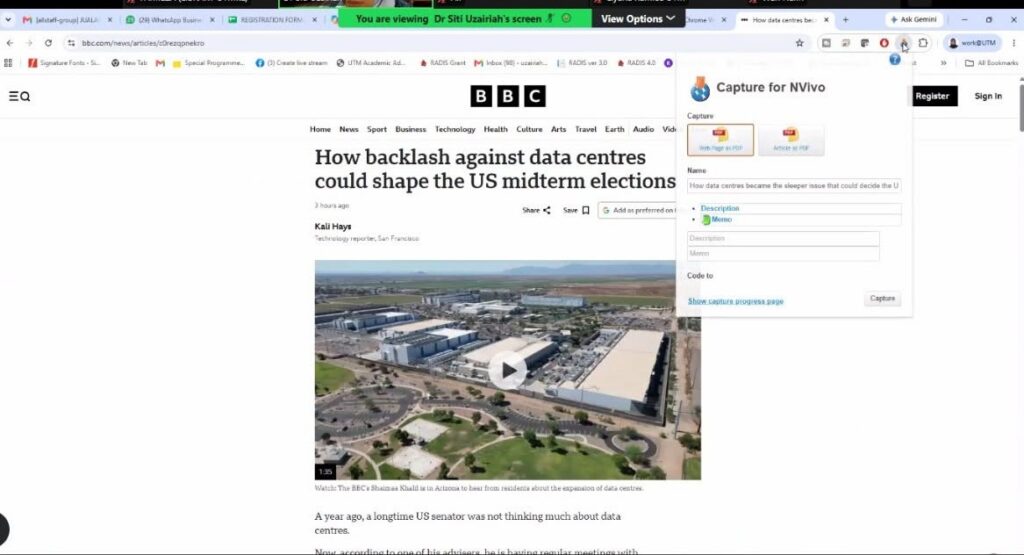
This perspective highlighted that NVivo is more than just a tool for coding data; it supports a more organized and systematic approach to qualitative analysis. Through practical demonstrations, participants explored how to organize research materials, develop codes, identify emerging themes and interpret findings in relation to their research objectives.
The workshop also encouraged participants to look beyond the technical functions of the software and consider how a well-structured analytical approach can contribute to more meaningful and credible research findings.
Participants responded positively to the session, describing it as “excellent” and “informative and well organized.” The practical demonstrations were particularly appreciated, offering participants a clearer understanding of how NVivo could be applied to their own research projects.
Feedback also revealed a growing interest in more specialized research training. Several participants expressed a preference for face-to-face sessions, additional time for hands-on exercises and more detailed explanations of specific software features. Some also suggested introducing other qualitative data analysis tools, such as ATLAS.ti, in future workshops.
Interestingly, WhatsApp groups emerged as an effective platform for promoting the workshop, helping UTM Library connect with researchers from different institutions and extend its reach beyond the university community.
The encouraging response to this second session reflects the continuing relevance of practical research training, particularly as researchers navigate increasingly diverse forms of qualitative data and digital analytical tools.
Beyond providing access to information resources, UTM Library continues to strengthen its role as an active partner in research and scholarly development, creating opportunities for researchers to learn, exchange knowledge and develop their research capabilities.
Through initiatives such as the NVivo Workshop, UTM Library remains committed to making research support more accessible, practical and responsive to the evolving needs of the academic community.
